




MIRRA, Methods for Irrigation and Agriculture, was created on September 2007 and based in Amman and Irbid, Jordan. It was converted to a special association that belongs to the Ministry of Environment at the end of 2010.


The Regional Mission for Water and Agriculture (MREA) of the French Embassy in Jordan was initiated in 1992 as diplomatic representation in the region (Jordan, Palestinian Territories, and Lebanon). Equipped with its team of experts, MREA set out to build and update the stakeholders’ capacities in addressing the challenges they face in water and agriculture.
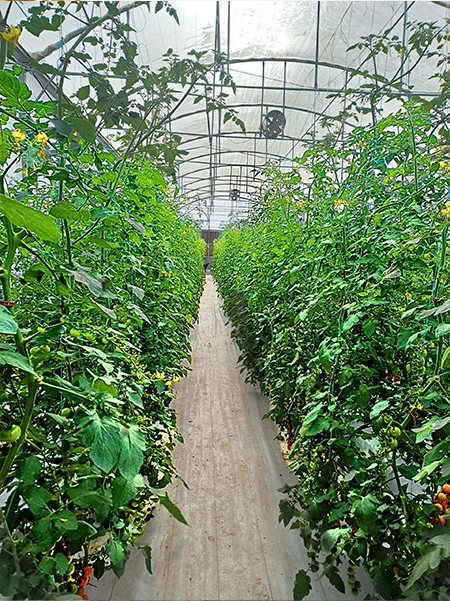
MREA improved the efficiency of water use in agriculture. Its core areas of intervention were: irrigation optimization, treated wastewater reuse in agriculture, improvement of fertigation practices and support to the horticultural production chain. MREA developed a unique approach based on the implementation of projects that were guided by comprehensive socio-economic assessment and technical analysis of the pilot areas, considering institutional stakeholders at a higher level.
MREA outsourced expertise from local and international, professional, and scientific partners, enabling it to update its references and skills for optimized practices. Through its activities, MREA developed its own methodology in irrigation and agriculture intervention. The outcomes of the Mission’s activities were continuously documented, and it published important references in the domains of irrigation and agriculture. In the last period, MREA was active in supporting institutions to draft fundable feasibility studies based on the outcomes of some of its projects.
Further to French cooperation reforms in 2006, and with the will and support of the French Embassy in Jordan, the idea of establishing MIRRA emerged to continue the mission of the Regional Mission for Water and Agriculture (MREA). Incubated and guided by MREA, MIRRA was created in September 2007, and backed up with the willingness and enthusiasm of the involved former MREA local staff and MREA’s historical partners and stakeholders of the agricultural sector. Made up of former MREA staff, MIRRA implements development initiatives in the water and agriculture sector, benefiting from MREA’s former regional experiences.


MIRRA's Services
- Implementation of developmental projects,
- Provision of technical expertise and consultancy, and
- Capacity building by training of the practitioners.
Optimization of Pressurized Water Networks
- Design and evaluation of on-farm irrigation networks,
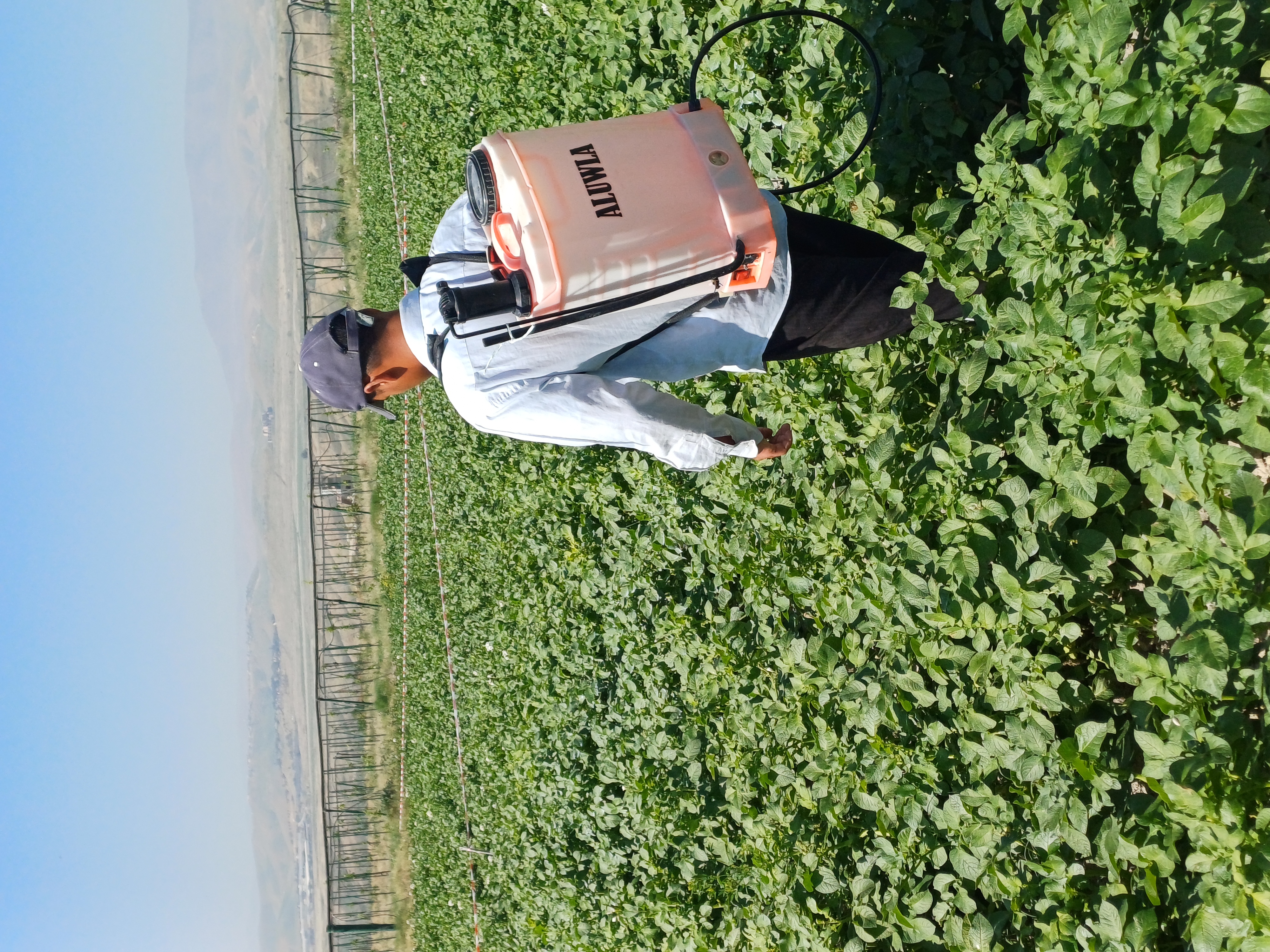
- Improvement of fertigation practices
- Irrigation scheduling and design of filtration systems
- Operation and maintenance of water distribution networks.
- Optimal operation conditions, filtration and rotations design of water pumping stations.
Capacity-Building of Individuals and Institutions
- Conduct theoretical and practical training courses for farmers, students, and professionals about on-farm irrigation techniques and practical skills.
- Provide technical support to commodity production chain of horticultural products.
- Provide technical and institutional capacity building of institutions, farmers’ associations, etc.
Treated Wastewater Use in Agriculture
- Design of irrigation systems using treated wastewater.
- Support initiatives that aim to develop the use of treated wastewater in agriculture.
Our Methodology
- Understand and identify with different stakeholders of the water and irrigation sector
- Network and collaborate the unfolding of projects related to water and agriculture at the local and the regional levels
- Implement, advise and support projects and relevant, adapted expertise
- Propose and develop the needs of the beneficiaries through local ties and a strong link with the field
Our Approach
- Innovation
We strive for innovative, creative solutions. - Adaptability
We employ technologies and approaches that have been validated in our specific field conditions. - Networking
We network, communicate and collaborate with other related local, regional and international institutions. - Sustainability
We focus on elements of durability and continuity in all of our interventions for long-lasting benefits. - Stakeholder Involvement
Stakeholders are involved in every step in all of our interventions.
Capacity Building
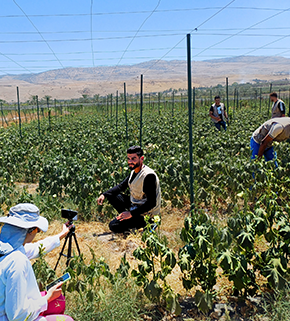
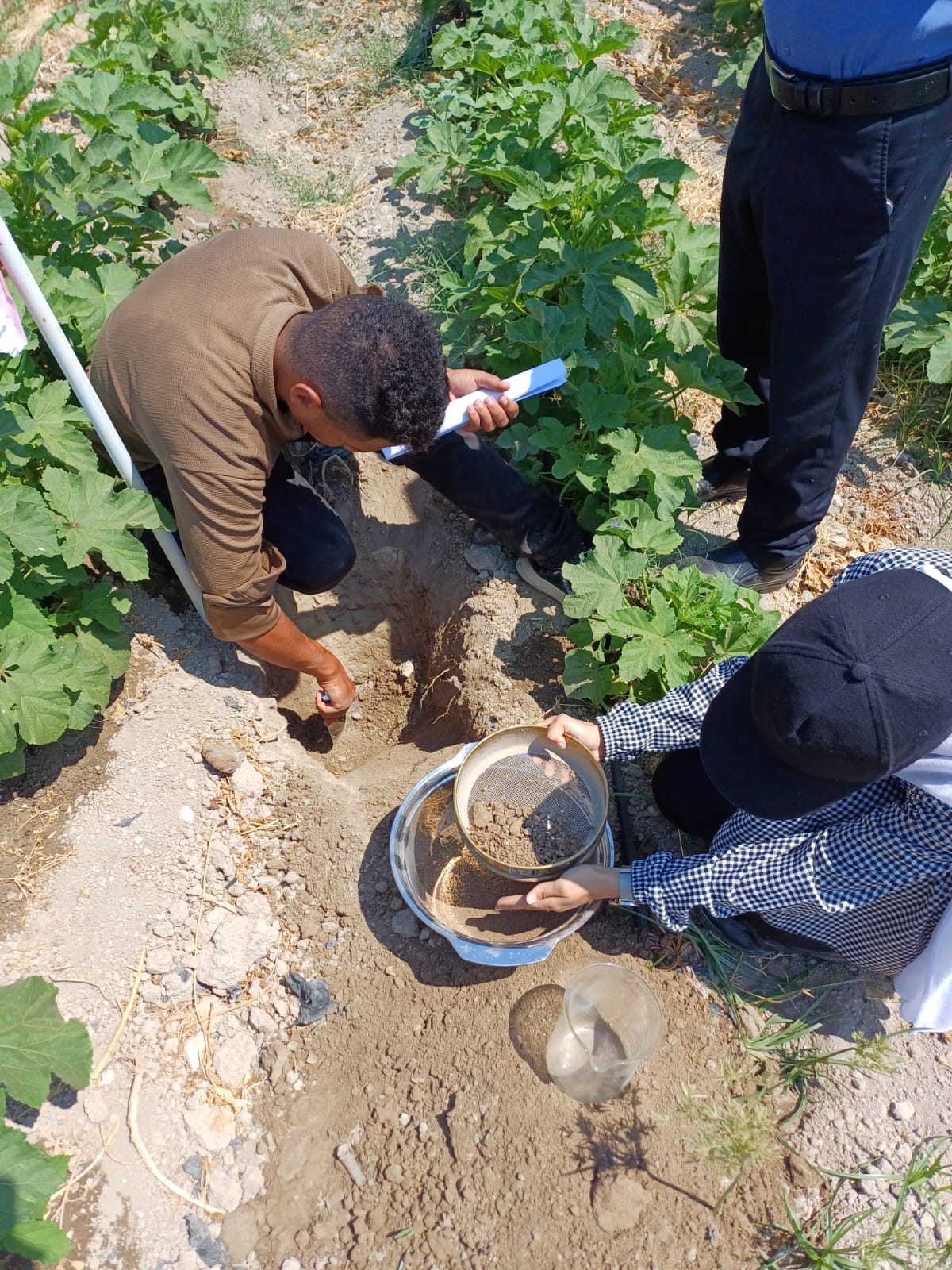
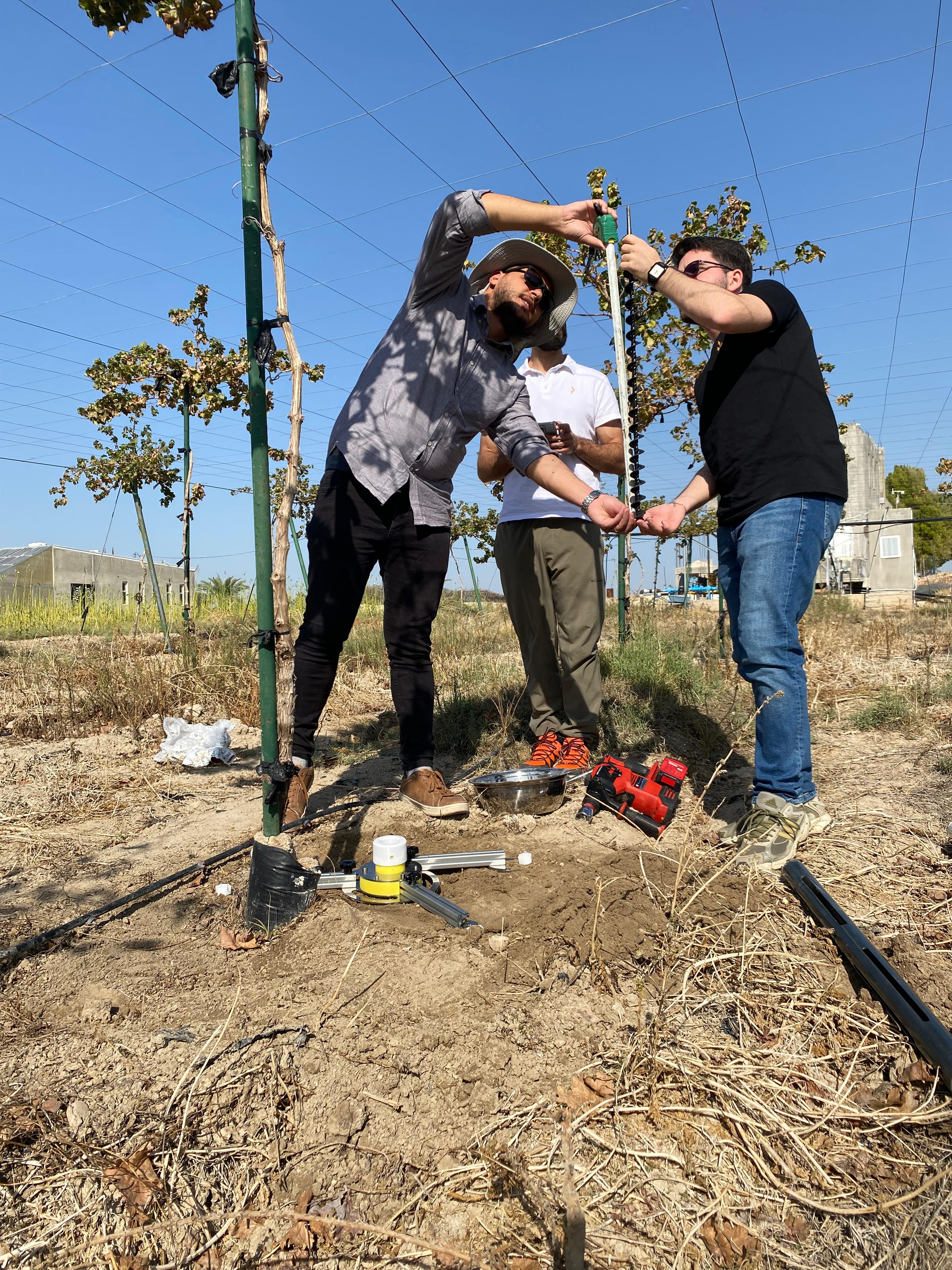
MIRRA offers practical (on the field) as well as theoretical trainings adapted to the local and regional context in irrigation and agriculture. The provided courses cover a wide base of beneficiaries and range from basic level courses, advanced courses and Training of Trainers (ToT).
Irrigation
Until today, more than 800 farmers and 170 practitioners (governmental extension agents and suppliers of irrigation materials) both locally and regionally (The Palestinian Territories, Iraq and Lebanon) have been trained on better irrigation practices. Some of them have become trainers themselves.
Irrigation Training Includes the Following Subjects:
- Design and optimization of on-farm irrigation networks (using a software developed by the MREA team).
- Good operation and maintenance of on-farm irrigation networks regarding:
- Operation (flow and pressure measurement, uniformity calculations, flushing techniques).
- Filtration (screen, disk and sand filters).
- Fertigation practices (fertilizer tanks and Dosatron®).
- Irrigation scheduling (using tensiometers).
GT Z Project (German Development Cooperation)
MIRRA in cooperation with GTZ have conducted several training courses for the purpose of training farmers in the middle and the northern part of Jordan Valley on the safe and sustainable use of treated wastewater. 350 farmers were trained.
Arab Potash Company
This project was funded by Arab Potash Company to achieve His Majesty King Abdullah II vision after he announced 2009 the year of agriculture. This project aimed to increase the efficiency of Fertigation (fertilization through irrigation water) in the regions of North Shunah & Ghor Al Safi area. A box of useful tools was given to farmers attended this event to help them measuring the irrigation efficiency at their farm and accordingly the fertigation efficiency.
Three workshops were held on the 11th of June, 29th of October & 5th of November, 2009.

What They Say
Bonnie Tolbet
There are many variations of passage of available but the majority have suffered alteration in some form by injected humor or randomed.

Sarah Albert
There are many variations of passage of available but the majority have suffered alteration in some form by injected humor or randomed.

Bonnie Tolbet
There are many variations of passage of available but the majority have suffered alteration in some form by injected humor or randomed.

Sarah Albert
Our Team
The Board of Directors includes five representatives of the professionals and the academics of the water and agriculture sector in Jordan and in the region, which brings a comprehensive and diverse flavour to MIRRA‘s approach and perspective.
The Executive Team is composed of skilled agronomists and irrigation engineers who have a multidisciplinary vision and approach. Our team is well trained and has a deep knowledge to deal with the problems of irrigation & agriculture, and always has applied solutions to the problems.
An integral part of MIRRA‘s human resources are the people who make up its network of local and international experts and specialists on different technical and organisational subjects, who can be mobilised for short or long term consultancy (studies, missions, projects, etc).


There are many variations of passage of available but the majority have suffered alteration in some form by injected humor or randomed.