Realizing Sustainable Agriculture and Efficient Water Management in the Azraq Basin in Jordan through the Adaptation and Integration of Proven Technology and Community Partnership

Problem Statement
Jordan faces extreme water scarcity, with one of the lowest per capita water availabilities in the world. The Azraq Basin, a critical agricultural and groundwater resource in the country, is under increasing pressure due to unsustainable agricultural practices, over-pumping of groundwater, and soil degradation caused by salinity and poor water quality. Farmers in the basin face declining yields, deteriorating soil health, and high irrigation costs, which threaten both their livelihoods and the environmental integrity of the region.
In addition, youth engagement in agriculture is limited, and women farmers face unique challenges in accessing technologies, markets, and technical training. There is also a gap in the translation of proven technologies into local farming contexts, and in the institutional support for community-driven solutions to water and land sustainability.
This project was developed to address these interconnected environmental, technical, and socio-economic challenges by introducing and adapting scalable, water-saving agricultural technologies, and empowering local stakeholders with the tools and knowledge to sustain them.
Project Summary
The project titled “Realizing Sustainable Agriculture and Efficient Water Management in the Azraq Basin in Jordan through the Adaptation and Integration of Proven Technology and Community Partnership” was implemented by MIRRA from May 2019 to October 2020, with funding from the U.S. Department of State / OES. The initiative aimed to combat unsustainable water usage, improve soil productivity, and promote inclusive, environmentally sound agricultural practices in the Azraq region.
The approach combined the deployment of proven irrigation and salinity management technologies with training, field demonstrations, and the engagement of farmers, youth, and institutions to ensure the adoption and long-term use of these practices.
Project Objectives:
- Introduce and adapt an integrated technological package that addresses water scarcity, soil salinity, and inefficient agricultural practices.
- Demonstrate and validate the performance of these technologies on two pilot farms (one male- and one female-managed) in the Azraq Basin.
- Build local capacity among farmers and youth on sustainable agricultural and irrigation techniques.
- Engage stakeholders—including policy makers, farmers, and researchers—to promote knowledge transfer, advocacy, and policy development.
- Develop training materials and guidelines for broader dissemination and replication.
To achieve the objectives listed, the project achieved the following key outcomes:
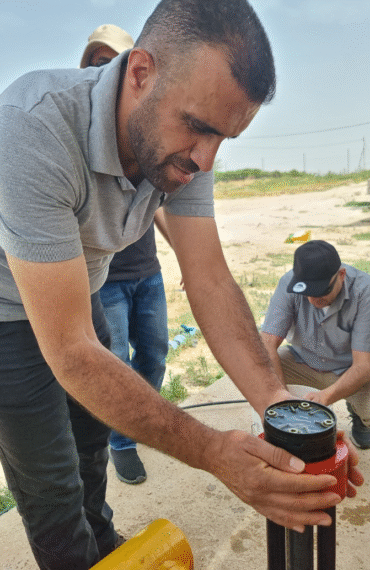
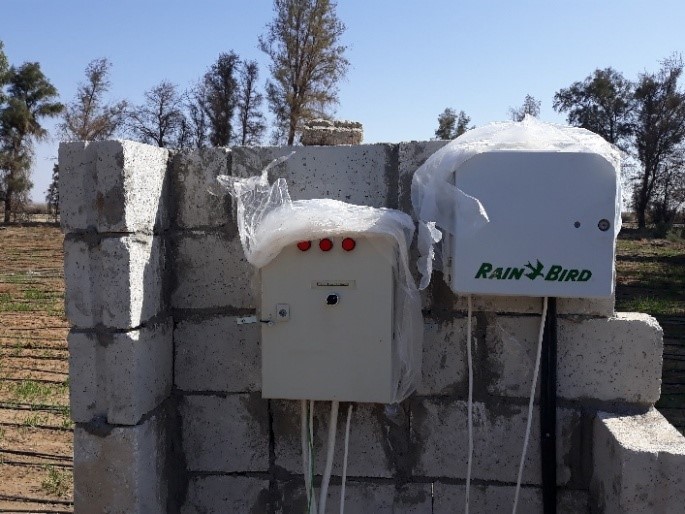
- Two full-scale demonstration farms were established, integrating electromagnetic soil mapping, subsurface drip irrigation, solar pumping, and smart irrigation controllers.
- Both demonstration farms showed significant reductions in water usage, improved soil health, and increased farmer awareness of resource-efficient practices.
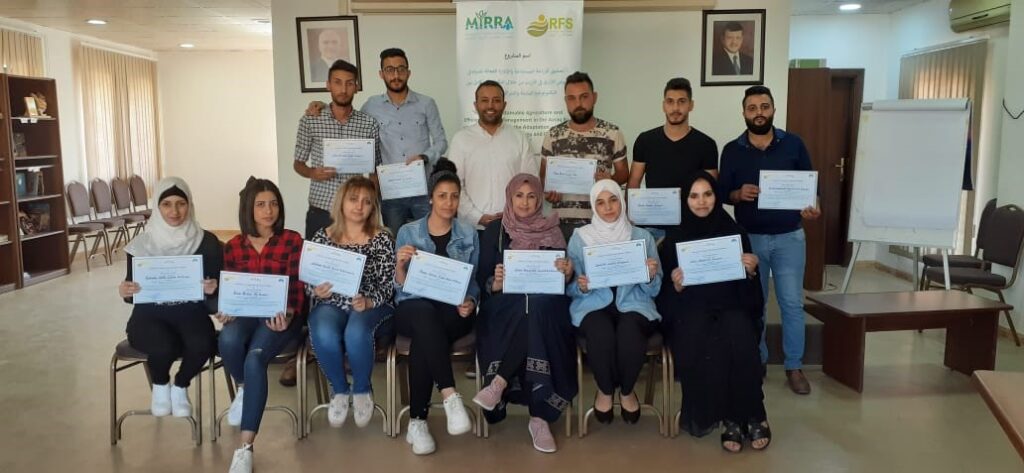
- 15 youth (8 females, 7 males) were trained in sustainable agriculture through MIRRA’s Summer School.
- Over 80 farmers participated in field days and workshops, receiving practical training and access to printed manuals in Arabic.
- The project catalyzed community conversations about reuse of saline water, soil management, and climate-smart agriculture.
- Key policy-level stakeholders were engaged to explore replicability and integration of outcomes into national strategies.
Project Activities
To meet its technical and capacity-building objectives, the project carried out a series of well-integrated activities across the demonstration, training, and advocacy components. Each activity was designed to reinforce sustainable farming practices in the Azraq Basin and to ensure the solutions tested were practical, inclusive, and scalable.
Key Activities:
Establishment of Demonstration Farms:
- Selected two pilot sites (one male- and one female-managed farm) in the Azraq area.
- Conducted soil and water assessments, including electromagnetic mapping for salinity profiling.
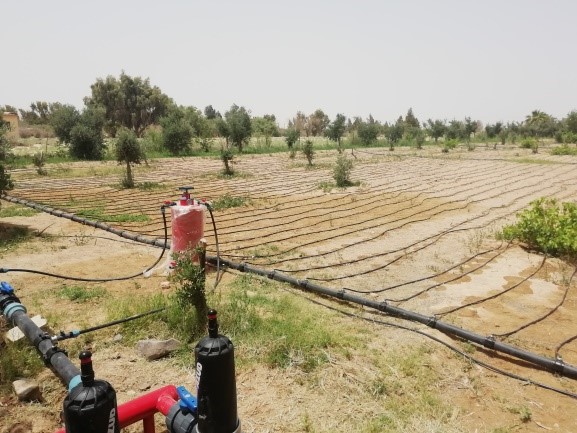
- Installed subsurface drip irrigation systems, powered by solar pumps, and linked to smart controllers for real-time water scheduling.
- Customized the integrated technology package based on farm-specific soil and water data.
Capacity Building and Farmer Engagement:
- Trained 15 youth (university students and recent graduates) through a 5-day Summer School program covering:
- Sustainable irrigation
- Soil fertility
- Farm water budgeting
- Hosted field days at the demonstration sites, reaching over 80 local farmers, including both men and women.
- Developed and distributed technical manuals and guides in Arabic on irrigation best practices and soil salinity management.
Monitoring, Evaluation, and Impact Measurement:
- Collected field data on water usage, soil salinity, and crop productivity from the pilot farms.
- Conducted pre- and post-training evaluations for youth participants and farmer attendees to assess knowledge improvement.
- Documented performance of each technology component to inform future scale-up.
Stakeholder Engagement and Policy Dialogue:
- Engaged with governmental bodies, NGOs, and academic institutions to promote knowledge sharing.
- Created visibility for the project through national networks and advocacy meetings on sustainable groundwater use.
- Promoted the integration of the project’s approach into regional development strategies for agriculture and water conservation.
Project Impact According to OECD-DAC Evaluation Criteria
Project Relevance
The project was highly relevant to the environmental, agricultural, and socio-economic challenges in the Azraq Basin, one of Jordan’s most critical and environmentally vulnerable regions.
- The Azraq Basin suffers from chronic water scarcity, soil salinity, and unsustainable groundwater extraction, all of which threaten agricultural productivity and rural livelihoods.
- The project directly addressed national priorities related to:
- Water conservation and efficiency
- Climate-smart agriculture
- Soil health improvement
- The targeted solutions—subsurface drip irrigation, solar pumping, smart controllers, and salinity mapping—were selected based on their proven success in similar arid regions and their ability to be adapted to local farming systems.
- The inclusion of women and youth as primary beneficiaries reflects a strong commitment to social equity, another key national and global priority.
By combining technical innovation with local capacity building and gender inclusion, the project directly supported the goals of Jordan’s Water Strategy, Sustainable Agriculture Development Plan, and multiple Sustainable Development Goals (SDGs), including SDG 6 (Clean Water), SDG 13 (Climate Action), and SDG 5 (Gender Equality).
Project Coherence
The MIRRA-ATLAS project demonstrated high coherence across internal design, external partnerships, and strategic alignment with policy frameworks.
Internal Coherence:
- The project integrated a bundle of complementary technologies—not as standalone pilots but as an interdependent solution.
- Technical implementation, training, and stakeholder engagement were mutually reinforcing:
- Demonstration farms enabled real-world validation
- Trainings ensured human capital development
- Stakeholder engagement bridged research, practice, and policy
External Coherence:
- The project aligned with the Jordan–United States Free Trade Agreement – Environmental Pillar, particularly its emphasis on water security and technology transfer.
- It built on MIRRA’s ongoing work in water reuse and efficient irrigation, ensuring continuity with past initiatives and strengthening institutional learning.
- Collaboration with farmers, youth, government officials, and researchers enabled consistent messaging and relevance across sectors.
The project served as a model of coherence by aligning innovation, institutional capacity, and on-the-ground realities in the Azraq Basin.
Project Effectiveness
The project effectively achieved its intended outputs and outcomes, as evidenced by the performance of technologies, the knowledge gained by participants, and the adoption of practices on the ground.
Key Achievements:
- Two demonstration farms (one male-managed and one female-managed) were established and fully operational with:
- Subsurface drip irrigation that significantly reduced water loss
- Solar pumping systems that lowered energy costs
- Smart irrigation controllers that optimized scheduling and saved water
- Both sites demonstrated improvements in:
- Water use efficiency
- Soil salinity reduction
- Crop productivity
- 15 youth (8 women and 7 men) completed MIRRA’s intensive Summer School and became advocates for sustainable agriculture practices.
- More than 80 farmers attended field days, where they learned practical skills and received Arabic-language manuals for reference.
- Pre- and post-training evaluations showed significant increases in participant knowledge, confidence, and willingness to adopt new practices.
The project succeeded in not just showcasing innovation, but also ensuring behavioral and perceptual change among key stakeholders.
Project Efficiency
The MIRRA-ATLAS project was executed efficiently in terms of time, budget, and resource allocation, with clear outputs delivered within the expected timeframe.
Operational Efficiency:
- The integration of multiple technologies into existing farm operations minimized additional infrastructure costs.
- Use of solar energy and locally adapted irrigation techniques maximized cost-effectiveness over time.
- In-kind contributions and existing partnerships reduced administrative costs and mobilized technical expertise without heavy overheads.
Resource Allocation:
- Resources were distributed efficiently between:
- Hardware procurement and installation
- Capacity building (Summer School, manuals, field days)
- Monitoring, data analysis, and outreach
- Project milestones were met on schedule despite external constraints, including environmental factors and COVID-19 impacts.
Overall, the project offered a high return on investment by combining low operational costs with high-impact results across environmental, educational, and social domains.
Project Impact
The project produced several transformative impacts at multiple levels—farm, community, institutional, and policy.
Environmental Impact:
- Demonstrated technologies led to:
- Reduction in irrigation water usage
- Mitigation of soil salinity
- Increased land productivity in semi-arid environments
- Enabled more sustainable groundwater use in the Azraq Basin, contributing to broader aquifer conservation efforts.
Economic Impact:
- Participating farmers experienced lower operational costs due to solar irrigation and improved yields through smarter water and soil management.
- Youth trainees gained new skills relevant to employment and entrepreneurship in green agriculture sectors.
Social Impact:
- Gender-inclusive training empowered women to become technology adopters and trainers, shifting social perceptions of their roles in agriculture.
- Field days created a collaborative platform for peer learning, building a stronger network of sustainability-minded farmers in the region.
Policy Impact:
- The project model and results were communicated to government stakeholders and donor agencies, laying the groundwork for potential replication and scale-up.
- Contributed to ongoing policy dialogue on sustainable land and water management in Jordan.
Project Sustainability
Sustainability was built into the project’s structure through technological design, capacity development, institutional engagement, and knowledge dissemination.
Technical Sustainability:
- Chosen technologies were low-maintenance, cost-effective, and scalable, with minimal operational requirements.
- The integrated technology package was installed in real-world farm settings, proving its practical viability and longevity.
Human Capital and Institutional Sustainability:
- Farmers received direct, on-site coaching that enabled them to maintain and adapt systems independently.
- Youth graduates of the Summer School now form a local talent pool of trained individuals who can support or replicate similar efforts.
- The project created institutional knowledge at MIRRA, allowing for long-term program development in similar regions.
Social and Knowledge Sustainability:
- Training manuals, Arabic-language guides, and field-day documentation ensure that project knowledge remains accessible and useful.
- The project fostered community-level ownership, where farmers viewed the innovations not as imposed solutions but as custom-fit tools for their own benefit.
By focusing on practicality, adaptability, and inclusion, the MIRRA-ATLAS project ensured that its results could endure well beyond the funded period.
Stakeholder Engagement with Strategic Groups
Project Beneficiaries
The MIRRA-ATLAS project was designed with a clear and inclusive strategy to reach multiple levels of beneficiaries, including individuals, institutions, and the wider Azraq Basin community. The engagement was multidimensional—encompassing technical, educational, economic, and social components.
Direct Beneficiaries:
- Two pilot farmers (1 male and 1 female) hosted full implementation of the integrated technology package on their farms:
- These farmers benefited from customized solutions that included solar-powered pumps, subsurface drip irrigation, electromagnetic soil mapping, and smart irrigation controllers.
- They received on-site coaching and training, enabling them to independently manage and maintain the system post-project.
- 15 youth (8 female, 7 male) participated in a 5-day MIRRA Summer School:
- Received training in sustainable agriculture, irrigation efficiency, soil salinity management, and environmental stewardship.
- Engaged in experiential learning, contributing to their personal development and professional readiness for the green economy.
Indirect Beneficiaries:
- Over 80 local farmers:
- Participated in field days and hands-on learning events held at the pilot farms.
- Received printed manuals and technical materials in Arabic on sustainable irrigation, fertigation, and salinity control.
- Benefited from peer learning and real-world demonstrations.
- Community stakeholders, including:
- Local water user associations and agricultural cooperatives.
- Community-based organizations working on rural development and sustainability.
- These stakeholders indirectly benefited through shared access to knowledge, resources, and technical outputs.
- National institutions and policy makers:
- Engaged through stakeholder briefings and technical documentation.
- Benefited from field-based data and tested models relevant to water policy, land-use planning, and climate-smart agriculture.
This layered engagement approach ensured that project outcomes were not limited to individual farms but extended across the entire Azraq agricultural ecosystem.
Project Engagement with Women
Gender inclusion was a core element of the project design and was successfully implemented across all major components, from technology adoption to youth training and knowledge dissemination.
- Women as Lead Beneficiaries:
A female farmer was selected as one of the two demonstration site hosts:
- This was a strategic decision to empower women in decision-making roles within agriculture, where they are often underrepresented.
- She received equal access to the full technological package, along with training and technical support.
- The performance of the system on her farm helped challenge social norms and demonstrated women’s capacity to adopt and manage advanced agricultural technologies.
- Youth Engagement:
- 8 of the 15 Summer School participants were female, reflecting deliberate gender balance in the recruitment process.
- These women gained practical skills in:
- Soil and water assessment
- Smart irrigation planning
- Data collection and analysis
- The inclusive learning environment allowed female participants to lead discussions, conduct field tasks, and contribute to sustainability dialogues.
Wider Impacts:
- By integrating women into technical roles and public demonstration activities, the project:
- Elevated the visibility of women as innovators and contributors to sustainable farming.
- Encouraged other female farmers in the Azraq Basin to engage with technologies they may have previously viewed as inaccessible.
- Supported long-term gender-sensitive knowledge transfer across the agricultural community.
This inclusive strategy strengthened social equity and created tangible models for future women-led innovation in water management and agriculture.
Project Engagement with Farmers
Farmers were both the core beneficiaries and key partners in the implementation and validation of the project’s technological and educational interventions. Their engagement was intentional, continuous, and outcome-driven.
Pilot Farmers:
- Two full demonstration farms (one male, one female) served as field laboratories for the project.
- Farmers were involved in:
- Baseline assessments of soil and water quality.
- Co-design of the irrigation and fertigation layouts based on crop types and soil salinity profiles.
- Active installation of systems and real-time learning during operation.
- Monitoring and providing feedback on system performance and crop responses.
- Their farms became regional knowledge hubs, visited by dozens of local producers during field days.
Broader Farmer Engagement:
- The project engaged over 80 farmers through:
- On-site field days showcasing live demonstrations of smart irrigation, fertigation, and solar pumping.
- Distribution of Arabic-language training manuals, which reinforced learning and supported post-training adoption.
- Open Q&A sessions, peer-to-peer knowledge sharing, and exposure to data from real-time field monitoring.
Capacity Building Outcomes:
- Farmers improved their understanding of:
- Water use efficiency techniques
- Soil salinity mitigation
- Crop selection and irrigation system matching
- The approach-built confidence among conservative or risk-averse farmers, showing that innovation could work in their local context without financial or operational risk.
Behavioral and Social Impact:
- The project helped shift perceptions from traditional water-intensive farming to sustainable water-smart agriculture.
- Some farmers expressed intent to replicate or partially adopt the technologies seen on the demonstration farms.
Through its direct and inclusive engagement, the project built a community of practice around smart irrigation and sustainable land use in the Azraq Basin.




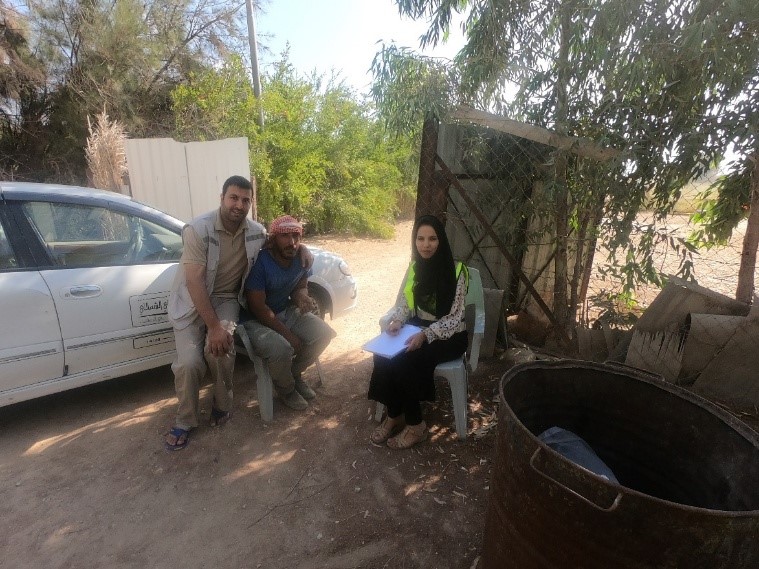
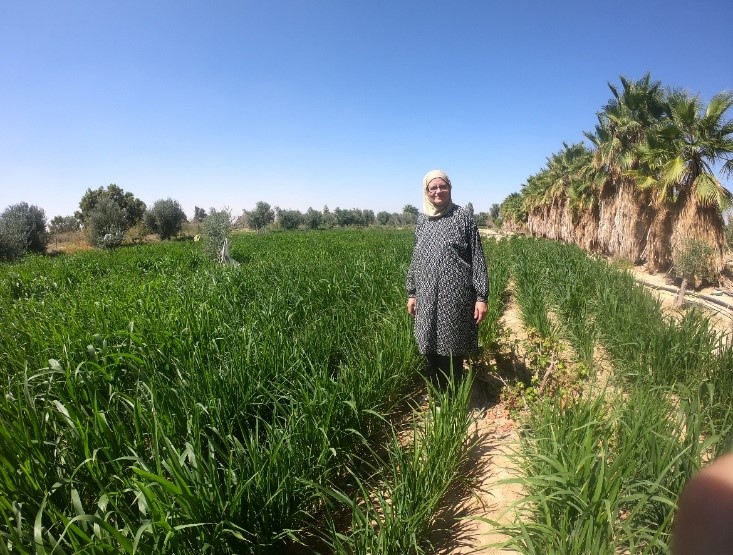
NUFFIC 2 – Empowerment Syrian Refugees Widows and Capacity Development in Plumbing, Gray Water Treatment, and Reuse in Agriculture (ESWP)
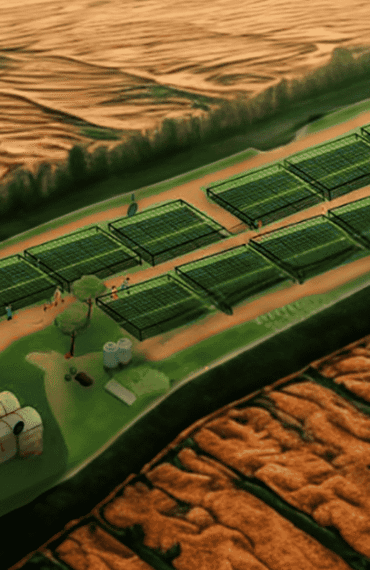
HTU Training – SAHARA Project: Innovative and Food Production inside the Water-Energy-Food Nexus inside Jordan
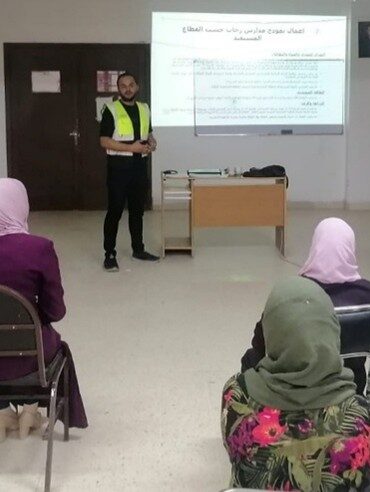
GIZ-CfW Project – Community Gardening and Public Parks Rehabilitation in Rihab and Djeineh, Al-Mafraq Governorate
Water-Wise Schools – Enhancing Living and Learning Conditions of Pupils and Teachers in Jordan