Enhancing Capacities of Syrian and Jordanian Youth on Smart Agriculture
Project Activities
The project implemented a well-structured set of activities to ensure the successful delivery of its objectives. These activities were designed to cover the full project cycle—from planning and market alignment to implementation, training delivery, and sustainability. The project adopted a hybrid training model, combining online and offline components, while also integrating both technical and soft skills. Stakeholder engagement, including employers and training partners, was a core part of the process to enhance the relevance and impact of the program.
- Desk Research
Conducted an analysis of employment and self-employment opportunities in the agriculture sector to guide the training content and outcomes. - Employer Engagement
Organized focus group discussions with employers to align the training design with market needs and explore internship opportunities. - Training Needs Assessment (TNA)
Developed a matrix of competencies and translated them into specific learning outcomes to inform training design. - Design of Training Materials
Created manuals and materials in Arabic, using visual aids to ensure accessibility and long-term usability by trainees. - Trainee Selection
Selected 40 youth participants (28 Syrian refugees and 12 Jordanians) based on clear inclusion criteria including education, vulnerability, and gender representation. - Delivery of Technical Training
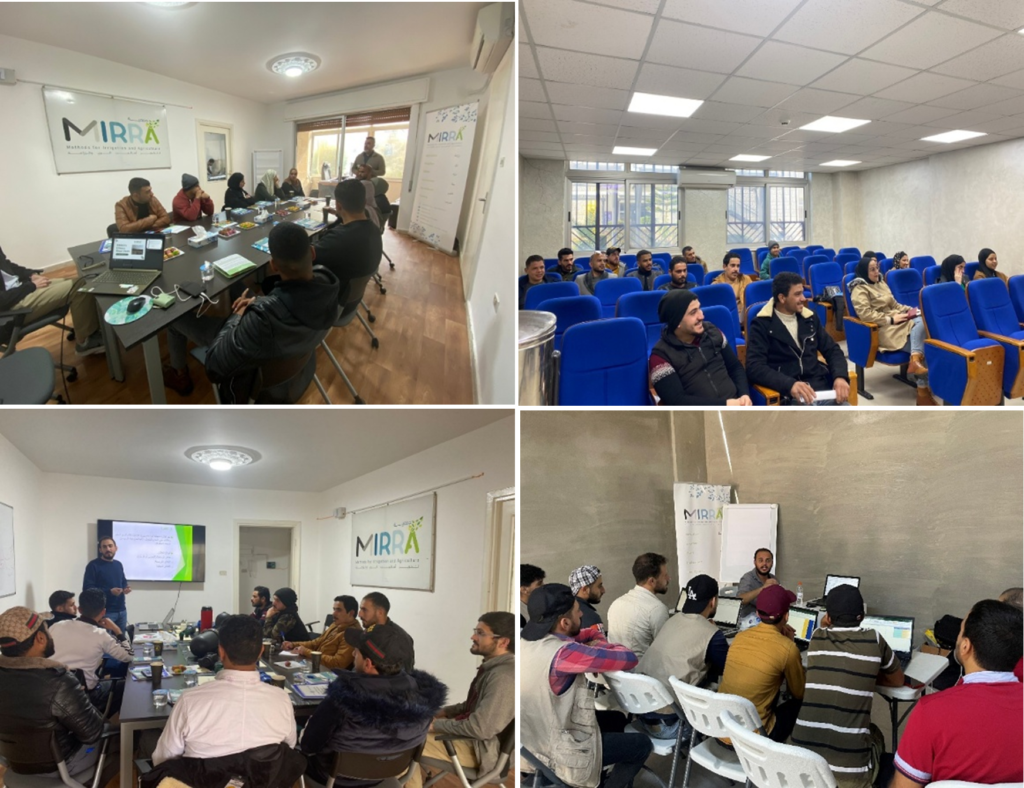
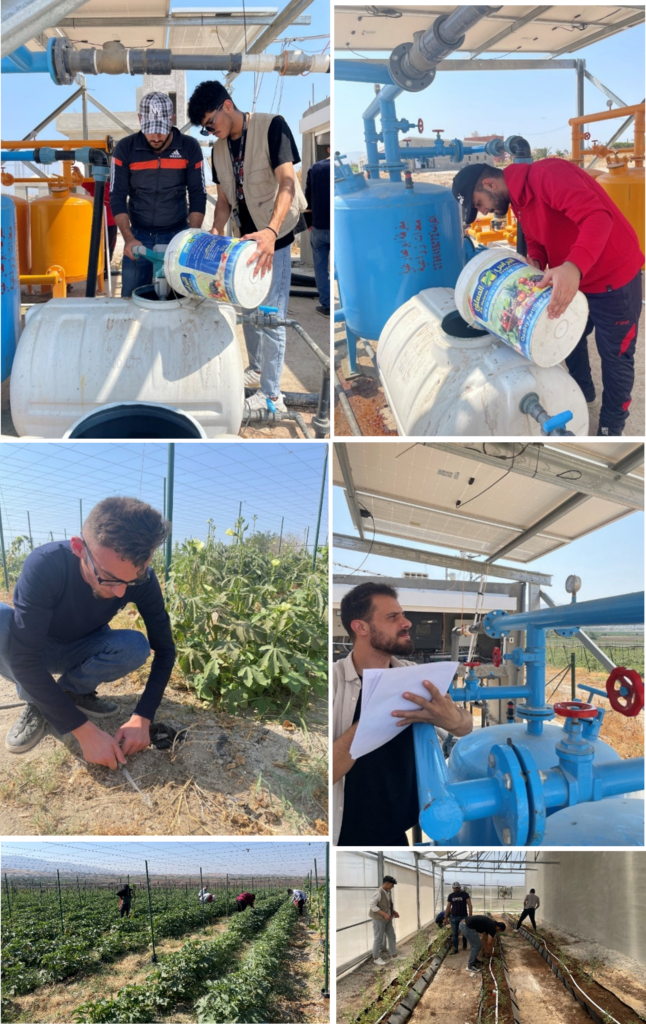
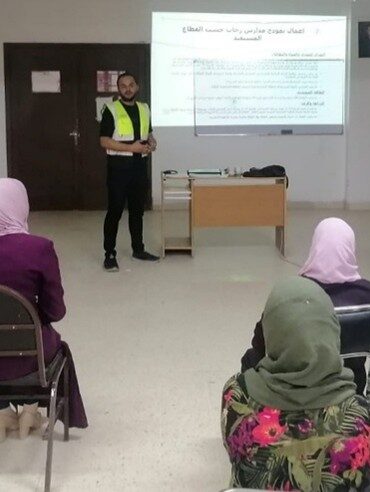
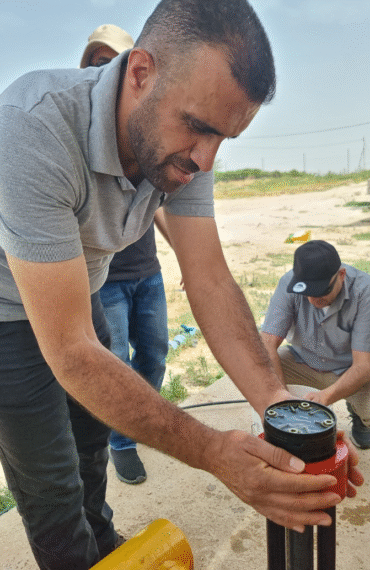
Provided hands-on and classroom training in smart agriculture topics such as soilless systems, irrigation, water quality, nutrient management, and pest control. - Soft Skills and Non-Technical Training
Partnered with Applied Science University (ASU) to deliver training in English, ICDL, communication, CV writing, and entrepreneurship. - Field Days and Internships
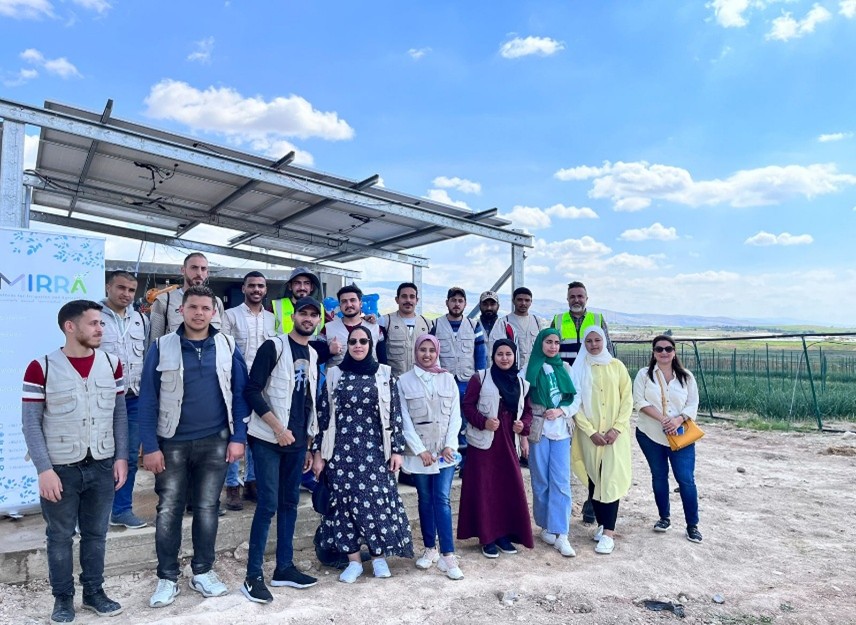
Organized interactive field events to connect trainees with farm owners, allowing them to showcase their skills and explore job or internship opportunities. - Distribution of Toolkits
Provided technical toolkits to each participant to support practical application of skills and encourage post-training engagement. - Monitoring and Evaluation
Regularly tracked progress through internal assessments, mid-term and end-cycle evaluations, and feedback mechanisms to ensure quality and adapt when necessary.
Project Impact According to OECD-DAC Evaluation Criteria
Project Relevance
The project “Enhancing Capacities of Syrian and Jordanian Youth on Smart Agriculture” directly addresses the critical socio-economic challenges facing Syrian refugees and underprivileged Jordanian youth in Jordan. These groups face high unemployment, limited access to formal employment, and a mismatch between their educational qualifications and the labor market needs.
The project was designed in response to real, documented needs:
- According to UNHCR (2021), over 600,000 Syrian refugees reside in Jordan, mainly in Amman, Irbid, Mafraq, and Zarqa, where employment opportunities are scarce due to legal, social, and economic constraints.
- The project aligns with national priorities such as the Jordan Compact and national efforts to promote Technical and Vocational Education and Training (TVET) as a solution to unemployment.
- The selection of smart agriculture as the technical focus is highly relevant. Agriculture remains a significant sector in Jordan, particularly for rural livelihoods, but it suffers from labor inefficiencies and low productivity due to the lack of trained workers.
The training content was designed based on a Training Needs Assessment (TNA) that ensured alignment with labor market demands. Additionally, the inclusion of soft skills such as English, ICDL, and entrepreneurship further enhances the relevance of the project to the current economic context.
Project Coherence
The project demonstrated strong internal and external coherence:
- Internal coherence: The intervention components—technical training, soft skills development, employer engagement, and toolkits—were logically interlinked. Activities reinforced each other to ensure participants not only gained knowledge but also had the tools and connections to apply it.
- Partnership coherence: MIRRA collaborated with Applied Science University (ASU), which delivered soft-skills training and supported logistics and accreditation. This partnership ensured the quality and credibility of the educational content and certificates provided
- Alignment with donor frameworks: The project was fully aligned with the objectives of the EDU-SYRIA Bottleneck Alleviation Programme under the EU Regional Trust Fund in Response to the Syrian Crisis (Madad Fund), supporting access to education, skills development, and labor market integration.
- Local and national alignment: The project complements Jordan’s national strategies for youth employment and capacity building, especially in marginalized and refugee-hosting areas like Mafraq and Irbid.
Moreover, the project’s targeting of both Syrian and Jordanian youth supports social cohesion, in line with broader national and donor-funded development programs.
Project Effectiveness
The project successfully achieved its planned objectives and delivered all expected outputs:
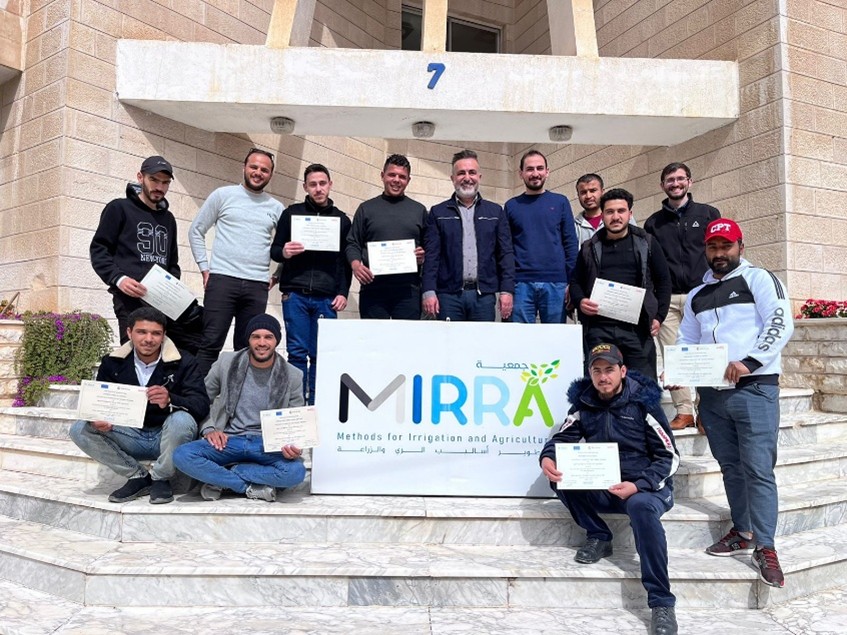
- 40 youth trained (28 Syrians, 12 Jordanians) in two cycles, in line with the original plan
- A comprehensive hybrid training program was implemented, covering smart agriculture (soilless systems, irrigation, nutrient and pest management), English, ICDL, and entrepreneurship.
- Training materials and manuals were developed in Arabic, printed, and distributed, ensuring usability even beyond the training period.
- No dropout cases were reported during training, demonstrating strong engagement and commitment from beneficiaries
- Two Field Days were conducted, enabling trainees to showcase their skills to farm owners and potential employers
- Toolkits were provided to trainees to facilitate immediate application of learned skills, enhancing impact.
- 60% female participation among Jordanian youth was achieved, supporting the gender equity objective.
- The training met labor market needs by involving employers in focus groups during the design phase and through engagement during implementation.
Monitoring and evaluation mechanisms were embedded throughout, including baseline assessments, mid- and end-cycle evaluations, and participant feedback, ensuring the project remained on track
Project Efficiency
The project was implemented efficiently with timely delivery and full budget utilization:
- 100% of the allocated budget for the interim reporting period was spent, indicating accurate financial planning and effective budget management
- The use of hybrid training (online and in-person) helped reduce logistical costs while ensuring flexibility during COVID-19 restrictions and bad weather conditions.
- Venue sharing and resource optimization: Trainings were conducted across multiple locations, including ASU facilities, MIRRA’s Living Lab, and knowledge stations, ensuring accessibility and minimizing transportation and infrastructure costs.
- MIRRA’s existing networks with the National Aid Fund and Syrian community leaders facilitated efficient identification and recruitment of eligible participants without costly outreach campaigns.
- The inclusion of soft-skill training through ASU’s existing infrastructure and trainers provided high value at minimal additional cost.
Moreover, trainees were divided into smaller groups to enhance learning efficiency and accommodate geographic spread, without compromising content quality.
Project Impact
The project has had both immediate and likely long-term positive impacts on individual beneficiaries and institutions:
For Beneficiaries:
- Enhanced employability through acquisition of practical technical skills and business-related soft skills.
- Improved confidence and career orientation: Beneficiaries reported better clarity on career paths and readiness to engage in self-employment or labor market entry.
- Toolkits and materials provided additional means for continuing agricultural work or offering services post-training.
- Indirect impact on households: Assuming an average family size of 5 to 6, around 200 indirect beneficiaries were positively affected in terms of economic stability and food security.
For Institutions:
- MIRRA and ASU both expanded their institutional capacity to deliver hybrid vocational training programs.
- New partnerships with employers and community actors were established, creating pathways for future collaboration and scaling.
In the longer term, the project is expected to contribute to better resource use in agriculture, improved water-use efficiency, and stronger local capacity for sustainable farming practices.
Project Sustainability
Sustainability was embedded in the project design through several strategic actions:
- Training materials/manuals were produced in Arabic with visual guidance, making them reusable and accessible beyond the life of the project
- A training manual was developed and can be updated and re-delivered by MIRRA or partners in future projects
- Trainees received toolkits, empowering them to apply their skills immediately and potentially start income-generating activities.
- The project promoted self-employment and internships, both of which are pathways that extend beyond the project timeline.
- Established partnerships with employers and institutions like ASU, National Aid Fund, and others create a support network for future initiatives.
- Gender-sensitive design, inclusive selection processes, and the focus on underserved communities build trust and long-term engagement with local populations.
- MIRRA’s follow-up mechanisms, including its Complaints and Response Mechanism (CRM) and internal M&E framework, contribute to long-term accountability and learning.
Stakeholder Engagement with Strategic Groups
Project Beneficiaries
The project “Enhancing Capacities of Syrian and Jordanian Youth on Smart Agriculture” was built around a clear, inclusive, and well-defined beneficiary engagement strategy, ensuring the direct involvement of the target groups from the proposal phase through implementation.
Target Groups:
Direct Beneficiaries: 40 youth aged 18–28 (70% Syrian refugees and 30% underprivileged Jordanians).
- Syrian trainees were recruited through community outreach and advertisement, with selection based on predefined criteria.
- Jordanian trainees were selected in partnership with the National Aid Fund, using lists of families classified as vulnerable (receiving Takaful or humanitarian assistance).
Educational Backgrounds:
Included both Tawjihi holders and university graduates in agriculture-related fields.
Selection Process:
- Syrian trainees were recruited through community outreach and advertisement, with selection based on predefined criteria.
- Jordanian trainees were selected in partnership with the National Aid Fund, using lists of families classified as vulnerable (receiving Takaful or humanitarian assistance).
Inclusion Criteria:
- Residence in Mafraq or Irbid governorates
- Prior experience or interest in agriculture
- Educational qualifications (Tawjihi, Diploma, or Bachelor’s in agriculture-related fields)
- Gender balance and equitable participation were prioritized.
Selection Methodology:
- Trainees were selected based on technical and non-technical descriptors, including academic background, vulnerability status, gender, and willingness to commit to the training.
- Signed contracts were used to ensure commitment and accountability throughout the training period.
Benefits Provided:
- Access to a comprehensive training program in smart agriculture and soft skills.
- Training materials/manuals and toolkits were distributed to enhance learning outcomes and post-training application.
- Exposure to internship opportunities and employer engagement events (e.g., Field Days).
- Ongoing support via WhatsApp groups and trainer mentoring throughout the training.
Project Engagement with Farmers
Farmers, though not the primary direct beneficiaries, were key strategic stakeholders in the project, particularly in ensuring that the training was market-relevant and that employment opportunities could be realized for trainees.