Support for Employment and Entrepreneurship in the Cultural, Agricultural, and Tourism Heritage Chain
Project Statement
Jordan faces two pressing and interconnected challenges: extreme water scarcity and high unemployment. Irrigation is the largest consumer of the country’s water resources, and therefore, water scarcity threatens a critical input for Jordan’s agriculture sector and food security. The country also is struggling with high unemployment, which undermines the human capital needed to supply skilled labor for modern agricultural methods that provide urgent water, energy, and financial savings to farmers. Unemployment is disproportionally high among women in Jordan, and this disparity is even greater among college educated youth. Consequently, the agriculture sector does not have a suitable labor market that encourages investment, training, and entrepreneurship for modern irrigation and agricultural methods which are becoming increasingly urgent to mitigate against Jordan’s chronic water shortage problem. This project was designed to increase capital investment into modern agriculture while building the capacity of local farmers to implement new, more efficient agricultural technologies.
Project Summary
The project’s ultimate objective was to promote an inclusive labor market for both refugee and vulnerable Jordanian populations. The project was designed with two specific objectives as the intervention logic for creating changes in Jordan’s labor market:
- Preserve in the short term the ability of refugees and Jordanians in poverty to provide for their families by promoting inclusive employment and in line with standards of protection and decent work water conserving technologies in agriculture.
- Support the creation and strengthening of self-employment and entrepreneurial activities capable of responding to market needs, encouraging economic, lasting, inclusive and sustainable growth.
These outcomes would be the basis for fostering structural change within Jordan’s labor market:
- Vulnerable Jordanians and Syrians would have access to rapid employment programs, training and in line with decent work standards, and local development plans.
- Strengthen the capacity of cooperative, community associations, as well as public and private bodies to plan and implement sustainable economic initiatives in the cultural tourism and agricultural sectors.
- Support economic self – employment and sustainable entrepreneurial activities in the cultural and agricultural tourism chain.
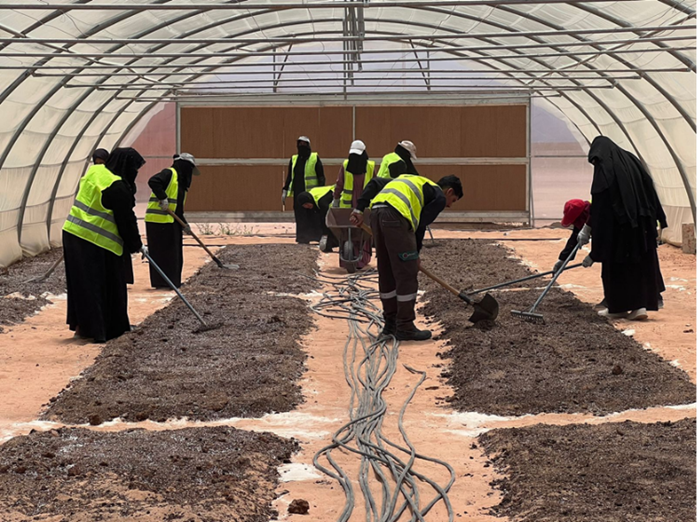
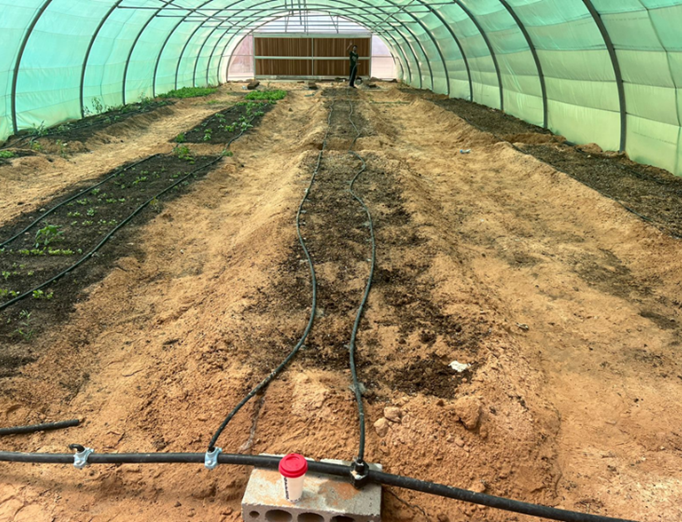
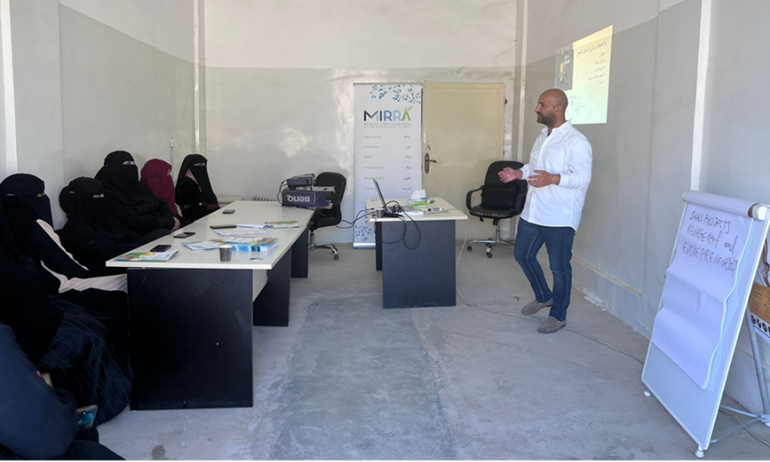
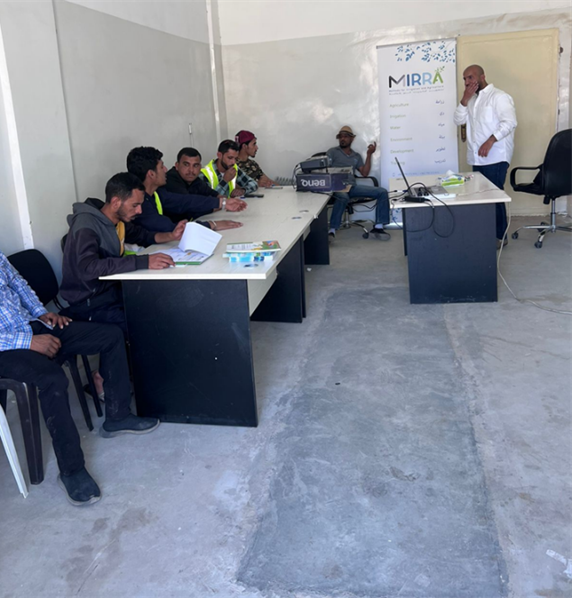
MIRRA led the development of new greenhouses and irrigation technologies to local farmers in Al-Quweira in Aqaba governate along with a training program to enhance he knowledge and skills of workers in new agricultural operations: soil mixture preparation, fertigation, soil management within a greenhouse, and managing irrigation systems. Training sessions on entrepreneurship, budgeting, operations, and project management where also included to improve the soft skills of farmers to better manage their farming operations.
Project Activities
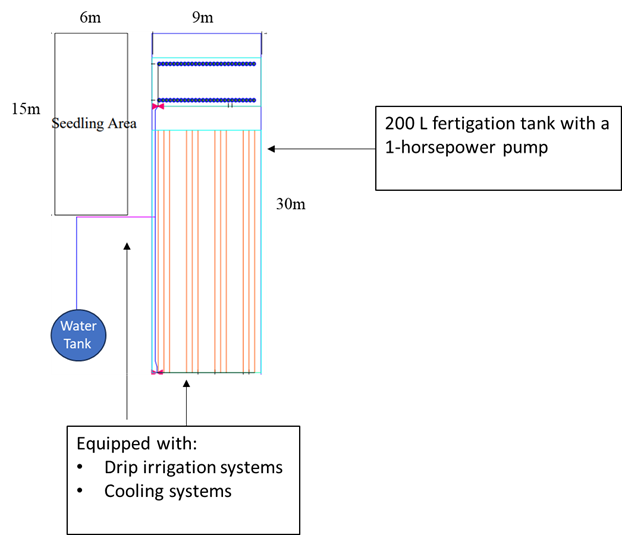
MIRRA led the development of modern greenhouses in the village of Al-Quweira which included the design and installation of irrigation systems, cooling systems, a fertigation unit, and a terrace for seedlings. All system components were installed and received quality assurance checks from MIRRA and AVSI project staff. MIRRA staff managed all elements of the greenhouse cultivation of leafy vegetables including seedling cultivation, fertilization, irrigation, and weeding for a growing period of 3 months.
Project Impact According to OECD-DAC Evaluation Criteria
Project Relevance
Jordan is facing a combined challenge of extreme water scarcity in addition to strenuous economic conditions, such as high unemployment, which limits the nation’s ability to cultivate a dynamic and innovative agricultural sector. The growing need for innovation and adopting modern agricultural technologies is often outpaced by the rising costs of inputs which financial constrains farmers’ ability to hire new skilled labor or install modern irrigation systems on their farms. This project provided relevant outputs that addressed both of these challenges. Installing new greenhouses while training local workers gives farmers additional infrastructure to improve their farming operations while empowering them with the knowledge to maintain these technologies and shape the farming practices within their communities.
Project Coherence
This project advances many of the same objectives as MIRRA’s past projects while expanding the geographic impact of MIRRA to the south of Jordan in Aqaba governorate. Our proliferation of modern agricultural technologies supports Jordan’s National Water Strategy 2023-2050 for more efficient usages of water. The capacity-building activities of this project support Jordan’s Green Growth Action Plan by equipping local farmers with the skills needed to enhance their productivity and sustainability.
Project Effectiveness
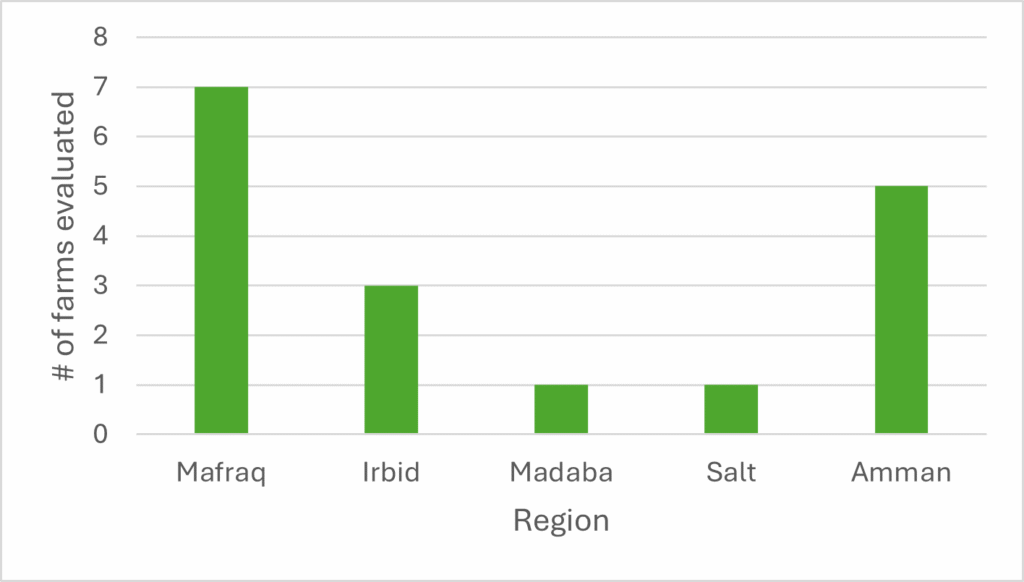
The project achieved its stated objectives and outcomes. On-farm evaluations and optimizations were conducted for 17 farms across five regions in Jordan.
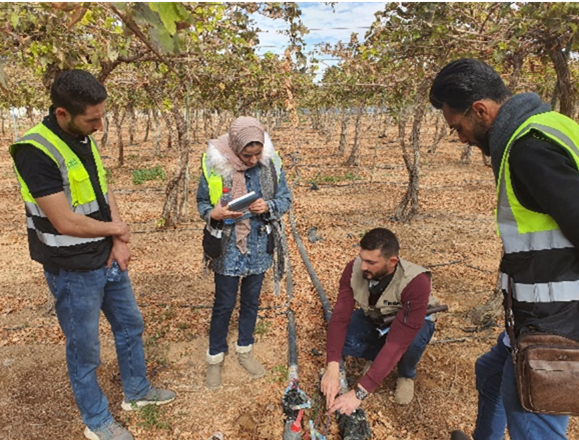
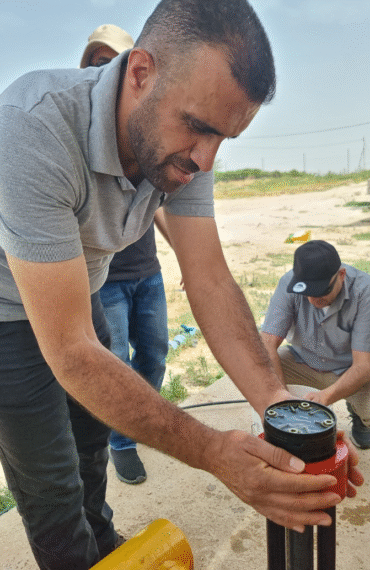
Each of these evaluations engaged farmers directly and provided the basis for optimizing their farm systems based on their unique needs and obstacles. MIRRA cooperated with local suppliers, agricultural experts, and universities to co-develop solutions to each farmer’s needs. The process of optimization improved farmers’ ability to maintain and operate critical infrastructure for achieving water-savings thereby advancing the first output of this project: to enhance the quality of irrigation systems in installation, operation, and maintenance. However, the project was unable to achieve the initially proposed number of farm visits due to suppliers’ lack of commitment to the project’s goals. Some suppliers delayed the process of obtaining necessary information and documentation, or they showed no interest in following up on the audit and evaluation process. While this affected MIRRA’s ability to fully achieve its initially planned output, it did achieve important strides in optimizing the farms it targeted. Three types of optimizations were observed in the evaluated farms: changing the emission devices from high discharge to lower discharge, renewing the laterals and emitters, or replacing the non-pressure compensating emitters with pressure compensating emitters. During the project, 58% of farm optimization was achieved through renewing the same irrigation system.
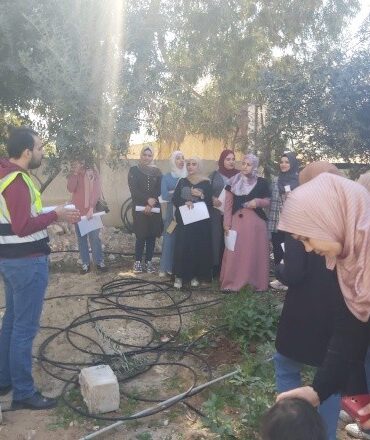
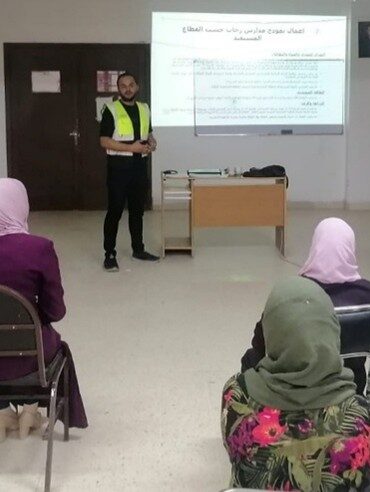
MIRRA’s experienced team of irrigation engineers taught students all of the components involved within a drip irrigation system: the design of irrigation networks, filtration, fertigation, as well as scientific knowledge about water hydraulics, soil, climate, and other relevant factors that impact the performance of drip irrigation systems. Such knowledge equips students with the knowledge and experience to work with modern agriculture methods and be equipped with the skills needed to improve Jordan’s agriculture sector.
Project Efficiency
This project used resources efficiently in two primary ways. First, by optimizing existing systems, MIRRA was able to achieve water-savings without the need for intensive capital investment to improve or replace irrigation equipment. By first addressing the gaps in existing irrigation systems, MIRRA could simultaneously build the capacity of farmers on important irrigation and agriculture concepts using systems they are familiar with. This ensures that the changes made while optimizing their system are understood by the farmers, and therefore, they can maintain these optimizations into the future for continued water-savings beyond the span of this project. Second, direct engagement with farmers and suppliers allowed project staff to clearly diagnose issues within each farmer’s operations and to suggest improvements. Direct engagement led to a clear understanding between farmer and MIRRA staff to implement efficient changes.
Project Impact
This project achieved notable impacts on the lives of farmer and students. The first output achieved important advances in the infrastructure of 17 farms. Each farm received specialized consultation from MIRRA staff to monitor their farm’s specifications and propose solutions based on the farms challenges. One farmer experienced persistent clogging in his drip emitters due to a poor filtration system that demanded time and labor. Upon close inspection, it was discovered that high quantities of iron and sulphate were the cause of the emitters clogging. MIRRA provided customized filtration unit that continues to serve the farmer’s needs resulting in time and labor saved.
Another farmer changed his emitter types from viro-jets (micro-irrigation) to pressure compensating (PC) online emitters with a flow rate of 20 liters per hour. The PC emitters’ flow rate is less than that of the viro-jets and allows for more precise irrigation which contributes to significant water and energy savings on the farm. Before switching to PC emitters, the farmer used to operate his irrigation pump from the entire month in order to fully irrigate his field. After the optimization process with MIRRA, he only operates his pump one week per month saying that “I noticed a difference in the energy consumption. I used to operate the pump every day, now at least I can turn off the pump 6 days a month.” Several farmers reported similar findings with energy costs decreasing by 30-50% by switching from viro-jets to PC emitters. Another farmer reported water savings of 30% under the optimized system.
The impact of the on-farm optimization process extended beyond water and energy savings. One farmer invested the cumulative savings of time, labor, water, and energy gained under this project to build a hydroponic system on his farm. Without facing the burden of water shortage, this farmer is capable of reinvesting into his own farm to further realize water and energy savings from new techniques, such as hydroponics, and he plans on building more hydroponic systems on his farm.
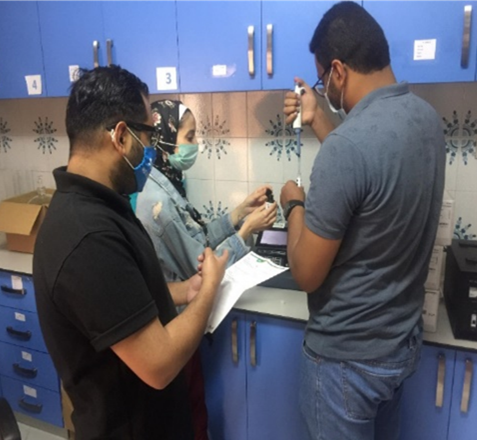
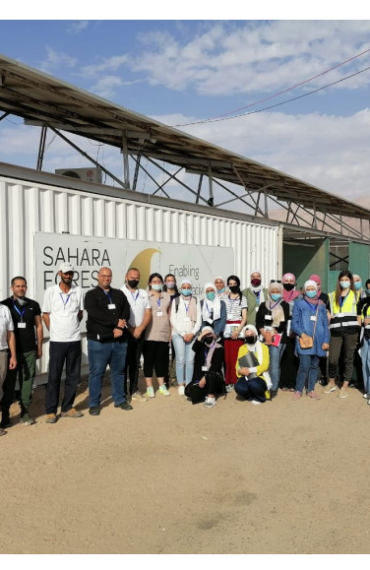
The apprenticeship program trained six agricultural engineering students in modern irrigation methods. Students received training in six different modules covering topics such as hydraulics, crop evapotranspiration, designing drip irrigation networks, the soil-water relationship, irrigation scheduling, and evaluation methods of drip irrigation such as uniformity and efficiency. MIRRA combined practical training with theoretical training for a deep understanding of the components and considerations of designing, operating, and maintaining a drip irrigation system.
Each of the six agricultural engineering students received training in hard skills such as report writing, CropWat software, and ClimWat software. At the conclusion of this training program, four of the six students were hired by agricultural organizations to begin working in Jordan’s agricultural sector.
Project Sustainability
The capacity-building element of this project will ensure that capital improvements to each of the 17 farms will persist into the future benefiting farmers and the surrounding community. The project engaged with farmers at all stages of the project and trained them on the necessary concepts and technologies implemented on their farm. The capital improvements to each farm will have lifecycles which will persist for several growing seasons, and with farmers more aware on how to properly maintain their systems, it is possible these systems will continue to last longer than average providing further water and energy savings each month.
The capacity building of students is a sustainable model for improving the human resources and awareness of Jordan’s agriculture sector. The knowledge and skills they acquired will continue to serve their professional goals into the future. Two thirds of the agricultural engineering students who participated in this project have been hired into the agricultural labor market. They will continue to benefit financially and professionally as a consequence of their training received during this project.
Stakeholder Engagement with Strategic Groups
Project Beneficiaries
This project targeted both farmers and youth as the direct beneficiaries of this project. Capacity building activities for both farmers and agricultural engineering students provides awareness of modern irrigation techniques, builds trust between MIRRA and the community we serve, as well as target the wider context of the agriculture sector in Jordan where farmers struggle to improve their farming operations and young Jordanians struggle to find work in the rural labor market where unemployment is widespread.
Project Engagement with Farmers
MIRRA’s engagement with farmers was primarily done through an advisory role built upon mutual understanding and trust. Evaluations of farms were done in transparency and cooperation with farmers. All results and data collection were shared and explained to the farmers. MIRRA worked to build greater understanding between farmers, their operations, the suppliers who provide them with equipment, and other consulting organizations in the agriculture sector.
Project Engagement with Youth
MIRRA strives to educate students on modern irrigation methods and climate resilient agriculture. During this project, we directly engage agricultural engineering students with a focus on investing in female engineers. MIRRA announced the training opportunity on social media pages of several universities: Jordan University, Hashemite University, Jordan University of Science and Technology, Balqa’ Applied University. More than 250 CVs per cycle were received. MIRRA pre-selected a subset of CVs based on the following criteria: the applicant should have a bachelor’s degree in agriculture engineering specializing in irrigation or water, be entry-level, and have good soft skills in MS office and communication. Applicants were further evaluated based on university performance, skills, training courses, an interview process and English test. MIRRA performed all necessary steps to select qualified and competitive applicants for this apprenticeship program in order to ensure its long-term success and the students’ success in completing the apprenticeship.